
DIY how-to guides: step-by-step fixes for Australian homes
Short answer
Every guide here follows the same pattern: the right method for your situation, an exact shopping list and tool list, realistic times including drying and curing, the safety checks, and a clear line between the steps you can do yourself and the ones that legally need a licensed electrician, plumber or gasfitter.
Most home repairs are simpler than they look, once you know the method, what to buy, and where the legal line is. These guides are written for Australian homes, Australian products and Australian rules.
Guides
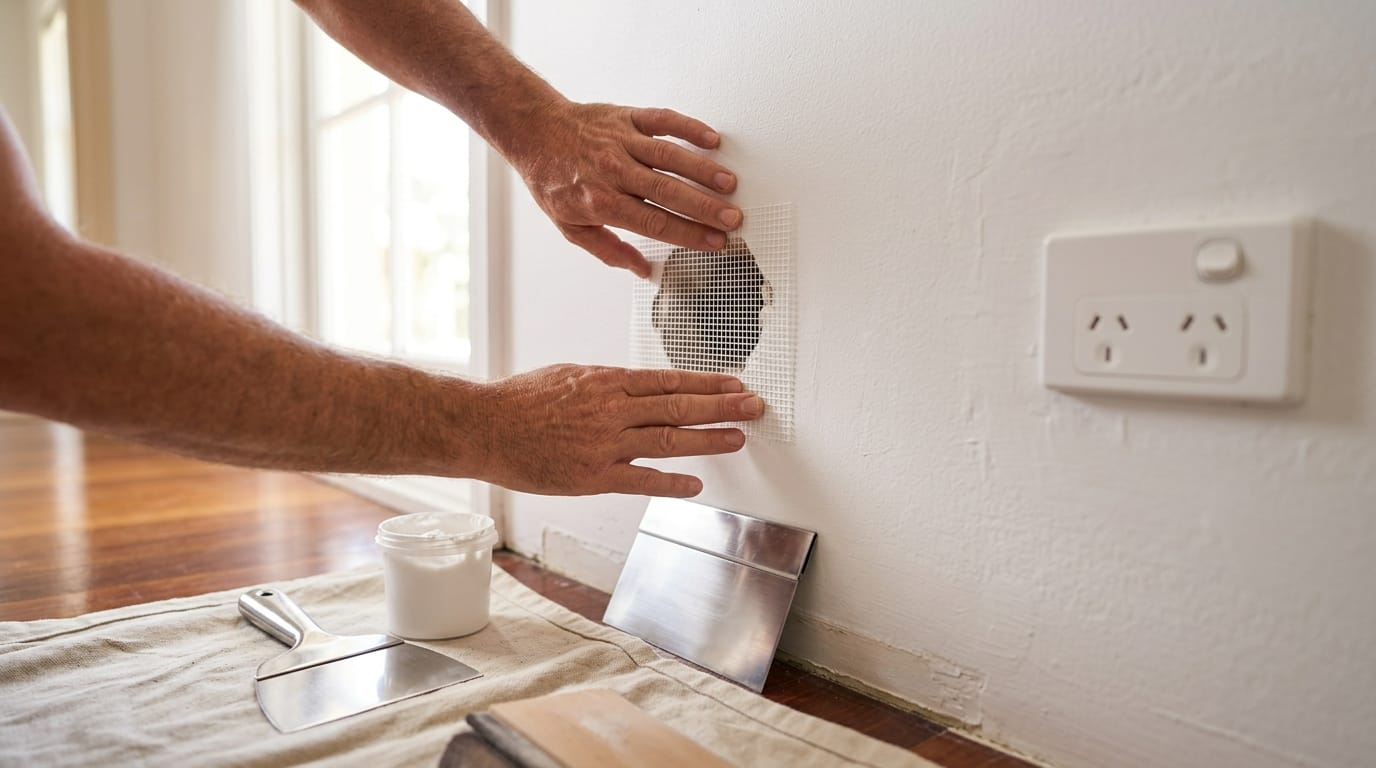
- How to patch a hole in plasterboard: dents, doorknob holes and big breaks, each with its own method and shopping list.
- How to get rid of mould in the bathroom: the health-authority method, and how to stop it coming back.
- How to fix a dripping tap: washer, ceramic and mixer taps, and which states let you do it.
- How to unblock a sink, shower or toilet: what’s safe and legal to try yourself, and the signs it’s a sewer problem.
- How to clean gutters safely: how often, ladder rules, and bushfire season prep.
- Renovating before selling: what adds value, what’s DIY, and what you must fix before you list.
Every guide answers the same five questions
- Which method fits my situation? The size of the hole, the type of mould, the age of the house.
- What do I buy? An exact list, in Australian product sizes.
- Which tools? Jib’s AI Toolbox remembers what you already own.
- How long will it really take? Including drying and curing, not just the hands-on time.
- Can I legally do all of it? Any step involving fixed wiring, gas or plumbing is flagged. See what you can legally DIY.
Related
- Home maintenance checklist: what to check, clean and service, and how often.
- Materials lists: quantities for decks, garden beds, paving and tiling.
- Bathroom floor calculator: tiles, adhesive, grout and waterproofing in one go.
This guide is general information, not legal or professional advice. Rules differ between states, councils and individual properties, and they change. Confirm with your state regulator or council before starting work, and if in doubt, get a licensed tradesperson.