
How to unblock a sink, shower or toilet, and when it's a plumber's job
Short answer
Start with the simple, legal steps: remove and clean the plug and strainer, pull hair out of shower and basin drains, then use a plunger (a cup plunger for sinks and showers, a flange plunger for toilets). If more than one fixture is blocked, water comes up in the shower when you flush, or the overflow gully outside is overflowing, the blockage is in the drain or sewer line. That's licensed plumbing work, and if it's in the water authority's pipe, it's theirs to fix: call your water utility's faults line first.
A sink that won’t drain, a shower pooling round your ankles, a toilet that rises instead of flushing: blocked drains are the most common plumbing emergency in any home. Many are simple to clear yourself. Some are a sign of a bigger drain problem that’s legally a plumber’s job, and occasionally the water authority’s to fix for free. Here’s how to tell the difference.
First: one blocked fixture, or several?
This decides almost everything.
| What you see | Where the blockage probably is | Who clears it |
|---|---|---|
| One sink, basin or shower drains slowly | In that fixture’s trap or waste pipe | Usually you (plunger, cleaning) |
| One toilet won’t flush properly | In the toilet pan or its outlet | Usually you (flange plunger) |
| Several fixtures slow, gurgling, or water rises in the shower when you flush | In the main drain | Licensed plumber |
| The overflow gully outside (the grated pipe near the house) is overflowing or its grate has popped | In the sewer line | Licensed plumber, or the water utility if it’s their pipe |
What you can do yourself
Across Australia, clearing a blocked fixture with a plunger and cleaning out the plug and strainer is ordinary household maintenance. Western Australia’s rules explicitly let owners clear a blocked fixture or waste pipe with a plunger, and Queensland lets you clean a ground-level trap grate. Work on the pipes themselves, including drain machines, pipe replacement and opening up drains, is licensed plumbing everywhere. NSW requires a licence for any plumbing or drainage work.
Sinks and basins
- Remove the plug and strainer and clean out food, hair and gunk.
- Pour a kettle of hot (not boiling) tap-hot water down to soften grease. Boiling water can soften or damage plastic pipes and loosen joints.
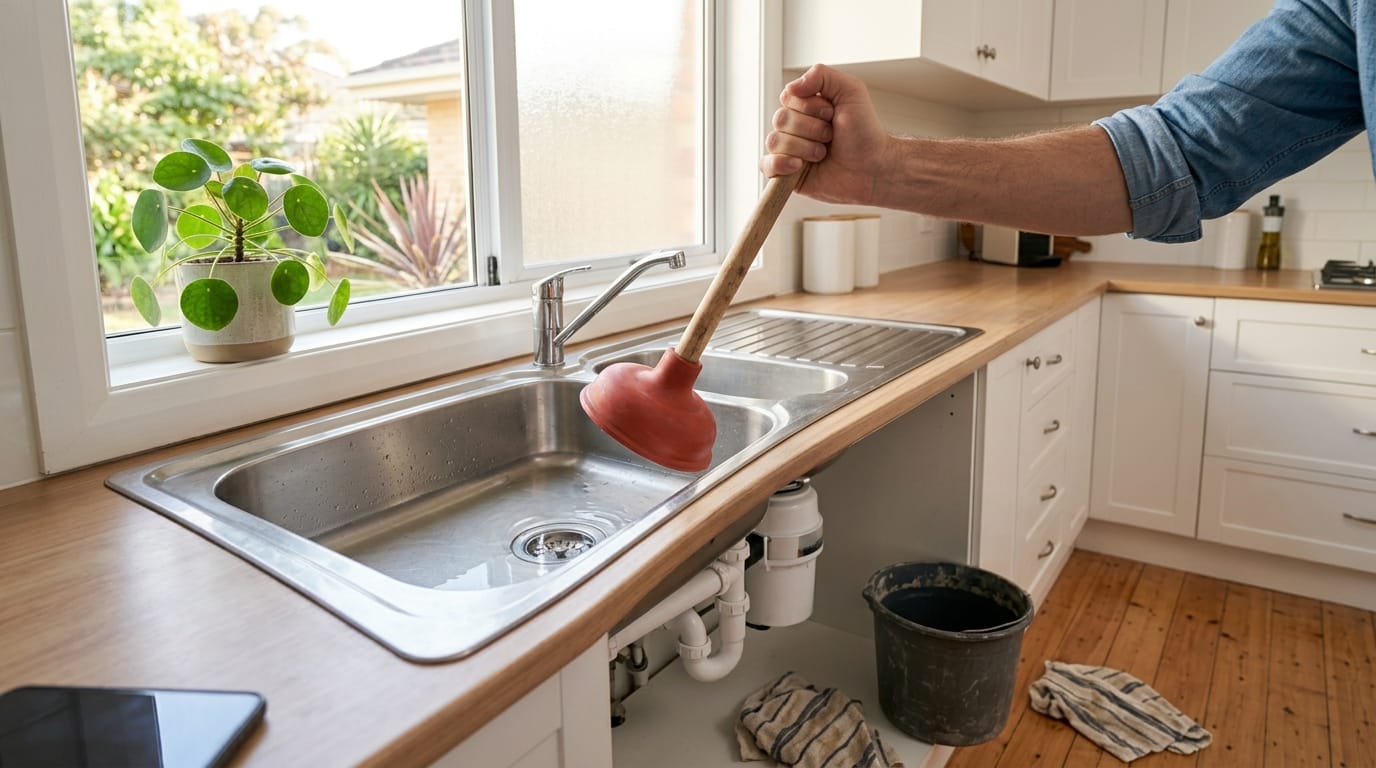
- Plunge. Use a cup plunger. Put a little water in the sink so the cup seals, block the overflow hole with a damp cloth, then plunge firmly 10–15 times. On a double sink, block the other drain too.
- Repeat a couple of times before giving up.
Showers
- Lift the grate (many unscrew or lift out) and pull out the hair. A plastic drain-cleaning strip with barbs is cheap and works well.
- Plunge with a cup plunger over the waste.
Toilets
- Don’t keep flushing. It only raises the water level.
- Use a flange plunger (the kind with a soft extension under the cup) so it seals in the pan’s outlet.
- Plunge slowly at first, then firmly. Let the water level drop before trying a test flush.
Wear gloves for all of it, and wash your hands afterwards.
What not to do
- Don’t mix drain cleaners, or use a plunger straight after a chemical cleaner. Caustic cleaners can splash back and burn skin and eyes.
- Don’t use chemical drain cleaners in a toilet, or at all if you’re on a septic system. Check the label first.
- Don’t pour boiling water into plastic pipes or a toilet pan. The heat can damage them.
- Don’t take apart pipes and joints unless you’re sure it’s allowed where you live. Replacing or altering waste pipes is licensed plumbing work.
- Don’t open the overflow relief gully or sewer inspection openings to clear a blockage. That’s drain work for a licensed plumber.
When it’s the water authority’s problem
Your property’s private drain runs from your fixtures to where it connects to the water utility’s sewer. Blockages in their pipe are theirs to fix. Sydney Water, for example, says to call its faults line (13 20 90) if you see a wastewater overflow, and it can help identify whether the blockage is in its network. If the utility’s crew finds its pipe is clear and yours is still blocked, the blockage is in your private pipes, and a licensed plumber is at your cost.
If sewage is overflowing from the gully or onto the ground, call your water utility’s faults line first. It’s often free if the problem is on their side.
Stop it happening again
- Kitchen: scrape plates into the bin. Never pour fat or oil down the sink; let it set and bin it.
- Bathroom: fit hair catchers in showers and basins, and clean them weekly.
- Toilets: only toilet paper. Wet wipes, even “flushable” ones, don’t break down like toilet paper, and water utilities regularly warn they cause sewer blockages.
- Outside: tree roots are the classic cause of recurring main-drain blockages in older clay pipes. If it keeps happening, a plumber can inspect the drain with a camera.
Put “clean shower and basin hair catchers” on a monthly reminder, and check the overflow gully grate when you do your six-monthly maintenance.
Frequently asked questions
Can I use a drain snake myself? Hand augers for sinks and toilets are widely sold. But clearing a drain line beyond the fixture, especially with a powered machine, is licensed drainage work. If a plunger hasn’t worked, call a plumber.
Does bicarb and vinegar unblock drains? It can help freshen a slow drain, but it rarely clears a real blockage. A plunger and removing the hair or food physically is more effective.
Who pays if I’m renting? Usually the landlord, unless the tenant caused the blockage (for example, by flushing wipes or pouring fat). Report it to your landlord or agent straight away; urgent repairs have their own rules in each state.
How do I know if it’s the sewer main? Several fixtures blocked at once, gurgling in other drains, water rising in the shower or floor waste when you flush, or an overflowing gully outside all point to the main drain or sewer.
Sources
Every rule on this page is taken from these official sources. If a rule has changed, please tell us and we’ll fix it.
This guide is general information, not legal or professional advice. Rules differ between states, councils and individual properties, and they change. Confirm with your state regulator or council before starting work, and if in doubt, get a licensed tradesperson.