
Step-by-step instructions for any home repair, from one photo (no research needed)
Short answer
Photograph the job and Jib's AI writes numbered, plain-English directions for your exact situation: the prep, the steps in the right order, drying and curing times, safety warnings, and a flag on any step that legally needs a licensed tradie where you live. The steps are saved with the job, so you can pick up where you left off, edit them, and ask follow-up questions like 'what if the grout won't come out?'.
You’ve got an hour free and a job that’s been bugging you for months. Then the research starts: three YouTube videos (one American, one with a tool you don’t own, one twenty minutes long), a forum thread that argues with itself, and a hardware store blog that assumes you’re starting from scratch. By the time you know what to do, the hour’s gone.
Jib skips all of that. Take a photo, and the AI writes the step-by-step directions for your job: not a generic article, but the steps for what’s actually in front of you.
What the directions include
| What you get | |
|---|---|
| Prep | What to check, buy and set up before you start, like isolating the water, laying drop sheets, or testing for cables |
| The steps, in order | Numbered, plain English, one action per step |
| Drying and curing | Where you have to stop and wait, and for how long, so you can plan the job around naps, school runs and weekends |
| Safety | The warnings that matter for this job: masks for dust, ladders, fumes, live wiring |
| The legal line | Any step that needs a licensed electrician, plumber or gasfitter is flagged, so you do the rest and book a pro for that bit (how the verdict works) |
| Materials and tools | Listed alongside the steps, and checked against your AI Toolbox |
Why photo-based steps beat a generic guide
A general “how to regrout a shower” article can’t see your shower. A photo lets the directions fit your situation:
- The right method for what’s there. Wall tiles or floor, cement or epoxy grout, a hairline crack or a missing chunk.
- Your materials. Timber, brick, fibre cement or plasterboard change the fixings and the tools.
- The warning you’d miss. If the photo shows water damage behind the grout, the steps say to fix that first, before regrouting over a problem.
- Your rules. Directions reflect the licensing rules where your house is, not another country’s.
Example: re-siliconing a shower
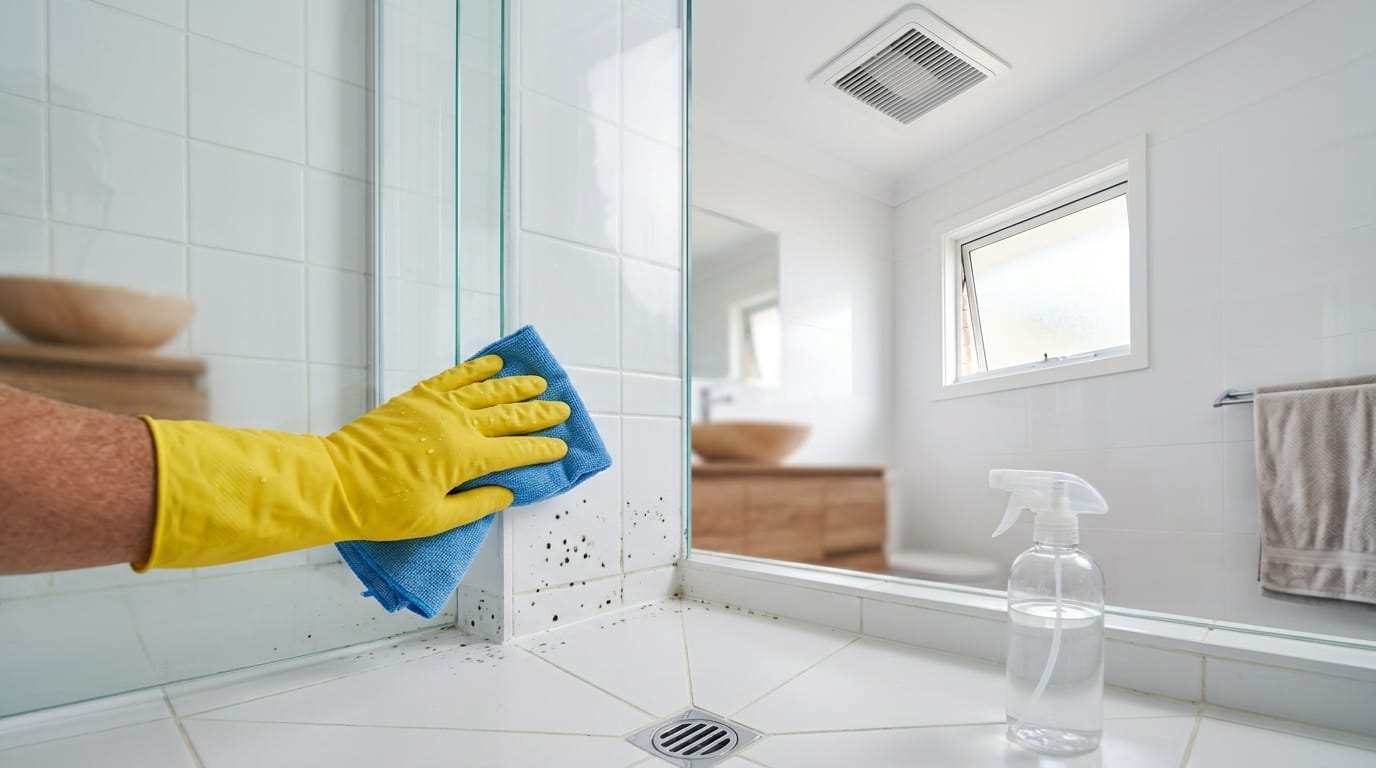
From one photo of a mouldy shower corner, the directions look something like:
- Check the silicone is the problem: mould that won’t wipe off means it’s grown into the sealant.
- Cut out the old silicone with a sharp blade or silicone remover tool; don’t gouge the tiles.
- Clean the joint with methylated spirits and let it dry completely (a few hours; overnight is better).
- Tape both edges of the joint with masking tape for a clean line.
- Run a continuous bead of mould-resistant bathroom silicone.
- Smooth it with a wet finger or tool, then remove the tape straight away.
- Wait 24 hours before using the shower.
Warnings: ventilate while working; if water is getting behind the tiles, the waterproofing may have failed (what to do). Verdict: DIY safe. See the full bathroom mould guide for the rest.
Built for doing jobs in slivers
The steps live with the job, so you don’t have to finish in one go:
- Work in sessions. Do steps 1–3 during nap time, 4–7 tomorrow. The steps are right there when you come back.
- Plan around the waits. Drying and curing times are called out, so you can start a job when you know you’ll be back.
- Pick up where you left off. Everything’s saved to your account, so the plan is there whenever you’re ready.
- Edit freely. Reorder, reword, add your own notes. It’s your job.
See more in quick home jobs you can finish in 15, 30 or 60 minutes.
Stuck on a step? Ask
Every job has its own AI chat. Ask the question you’d ask a handy friend, like “the old grout won’t come out, what now?” or “can I use the silicone I’ve already got?”, and the answer takes the job, the photo and the steps into account.
How reliable are AI directions?
They’re a strong, specific starting point, but you’re the one holding the tools:
- Read the whole list before you start, and check product instructions (curing times vary by brand).
- If a step doesn’t match what you see, stop and ask the job’s AI chat, or get advice.
- Follow the legal flags. If a step needs a licensed tradie, it isn’t a suggestion. See what you can legally DIY.
Frequently asked questions
Is it free? Jib’s AI features, including directions, are part of the paid plans, which come with a free trial. Tracking jobs, rooms and photos is free.
Can I add my own steps? Yes. Add, edit, reorder or delete steps in the app.
Does it work for bigger projects? Yes. For big jobs like a bathroom renovation, the directions follow the right order of trades. See the bathroom renovation sequence.
This guide is general information, not legal or professional advice. Rules differ between states, councils and individual properties, and they change. Confirm with your state regulator or council before starting work, and if in doubt, get a licensed tradesperson.