DIY or tradie? How to know before you start a job
Short answer
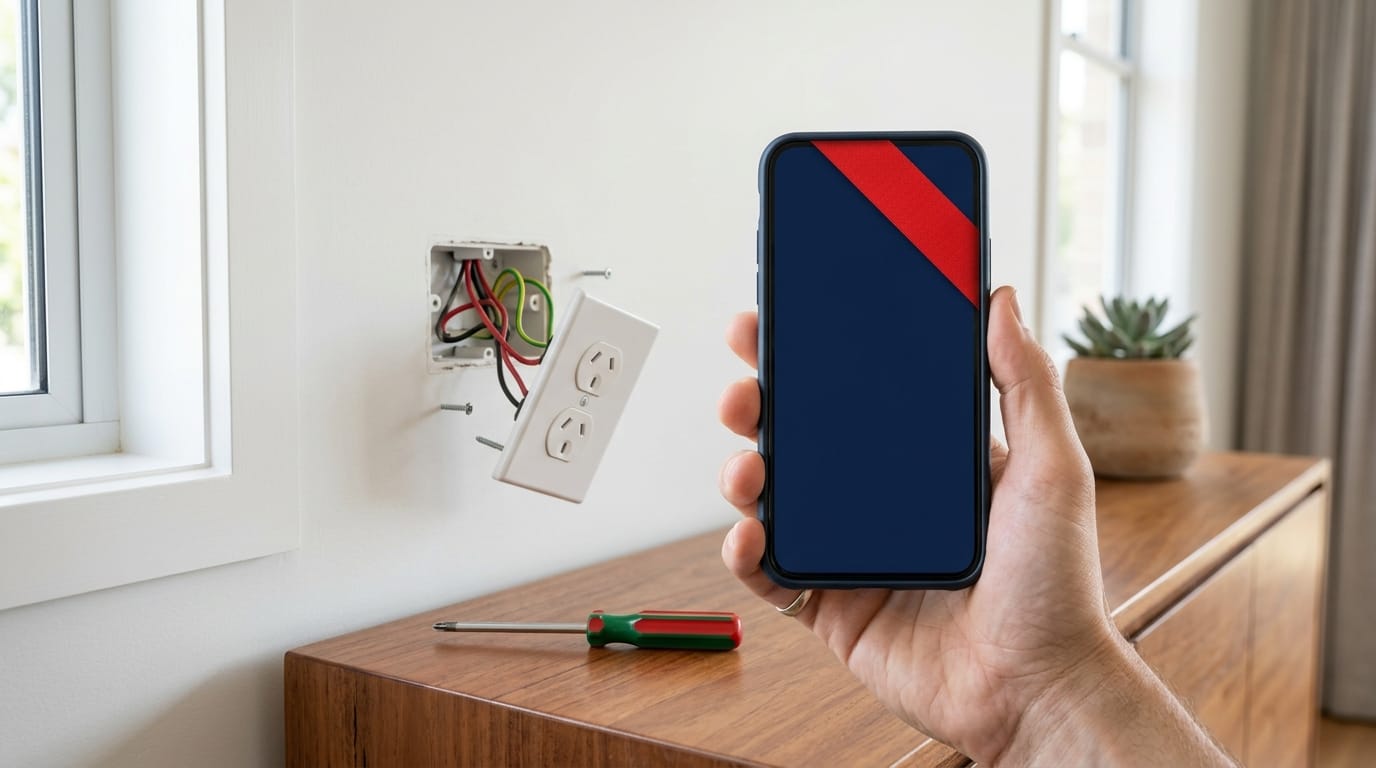
Ask one question first: does any step touch fixed electrical wiring, gas, or regulated plumbing and drainage? If it does, that step legally needs a licensed tradie in Australia, even if the rest of the job is yours. Jib does this check for you. Every job gets a verdict in the corner of the screen: green for DIY safe, red for tradie required, with the exact step that needs the licence.
Most DIY jobs are fine to do yourself. A few absolutely aren’t, and the line isn’t always where you’d expect. Swapping a power point looks easier than tiling a splashback, but in Australia only one of those is legal to do yourself.
The three questions that decide it
1. Does any step touch fixed electrical wiring?
Power points, light switches, light fittings, downlights, ceiling fans, hardwired smoke alarms, ovens and cooktops are all licensed electrical work in every Australian state. That’s true even when you’re replacing like with like. Changing a globe, plugging in an appliance and fitting a battery smoke alarm are fine. Full electrical rules →
2. Does any step touch gas?
Any gasfitting, including installing, moving or replacing a gas appliance or a bayonet point, needs a licensed gasfitter everywhere in Australia.
3. Does any step touch plumbing or drainage?
Most plumbing needs a licence too, with a short list of state-by-state exceptions such as changing a tap washer or a screw-on showerhead. Replacing a whole tap, a toilet or a hot water system is licensed work. Plumbing rules by state →
If the answer to all three is no, the job is almost always yours to do, though bigger structures can still need council approval (check the limits).
Hard isn’t the same as illegal
The verdict is about the law, not the difficulty. Retiling a bathroom floor is hard, slow and easy to get wrong, but you’re legally allowed to do the tiling. Swapping a power point takes ten minutes, and it’s licensed work. That’s why Jib keeps two things separate:
- The corner flag only turns red when a step legally needs a licence where your house is.
- Job warnings cover everything else: working at heights, fumes and ventilation, curing times, structural risk.
How the verdict works in Jib
- Log the job by typing it or snapping a photo.
- Jib checks it against the licensing rules for where your house is, using the job, its photo and its planned steps.
- The corner flag appears on the job: a green DIY safe or a red Tradie required sash in the top-right corner.
- Tap the flag to see why, for example “Connecting the new power point is licensed electrical work in Queensland.”
- Recheck any time if the job changes. Adding “and move the power point” to a painting job should change the answer.
A red flag doesn’t mean the whole job is off-limits. It tells you which step to book a pro for. The demolition, prep, painting, patching and clean-up around it are usually still yours, and batching the licensed steps into one call-out saves money.
Where the rules come from
Jib reasons from the licensing rules that apply where your house is. We publish the same rules, with links to the regulators, in our what you can legally DIY guide and the free DIY legality checker. Rules change and can vary by council, so treat the flag as a strong, sourced starting point, not legal advice. If a job sits on the line, ask your state regulator or a licensed tradie.
Frequently asked questions
Is the DIY-or-tradie verdict free? It’s part of Jib’s paid plans, which come with a free trial. Free users see a “DIY or tradie?” flag that unlocks it.
Does it work outside Australia? Yes. The verdict is based on where your house is, and the rules really do differ: in England, for example, you can replace a socket yourself under Part P (UK guide).
What if I disagree with the verdict? Tap the flag and choose Recheck after adding detail to the job description. Always follow your regulator over any app.
Sources
Every rule on this page is taken from these official sources. If a rule has changed, please tell us and we’ll fix it.
This guide is general information, not legal or professional advice. Rules differ between states, councils and individual properties, and they change. Confirm with your state regulator or council before starting work, and if in doubt, get a licensed tradesperson.