
Can I use a portable gas heater on a bayonet myself?
Short answer
Usually yes. Plugging a portable gas appliance into an existing gas bayonet is exactly what bayonets are designed for, so using one isn't gasfitting. Installing or moving the bayonet point itself is licensed gasfitting in every state. Before you buy or use a portable heater, check that the heater is legal to use where you live: some states restrict unflued gas heaters, particularly in homes and rentals.
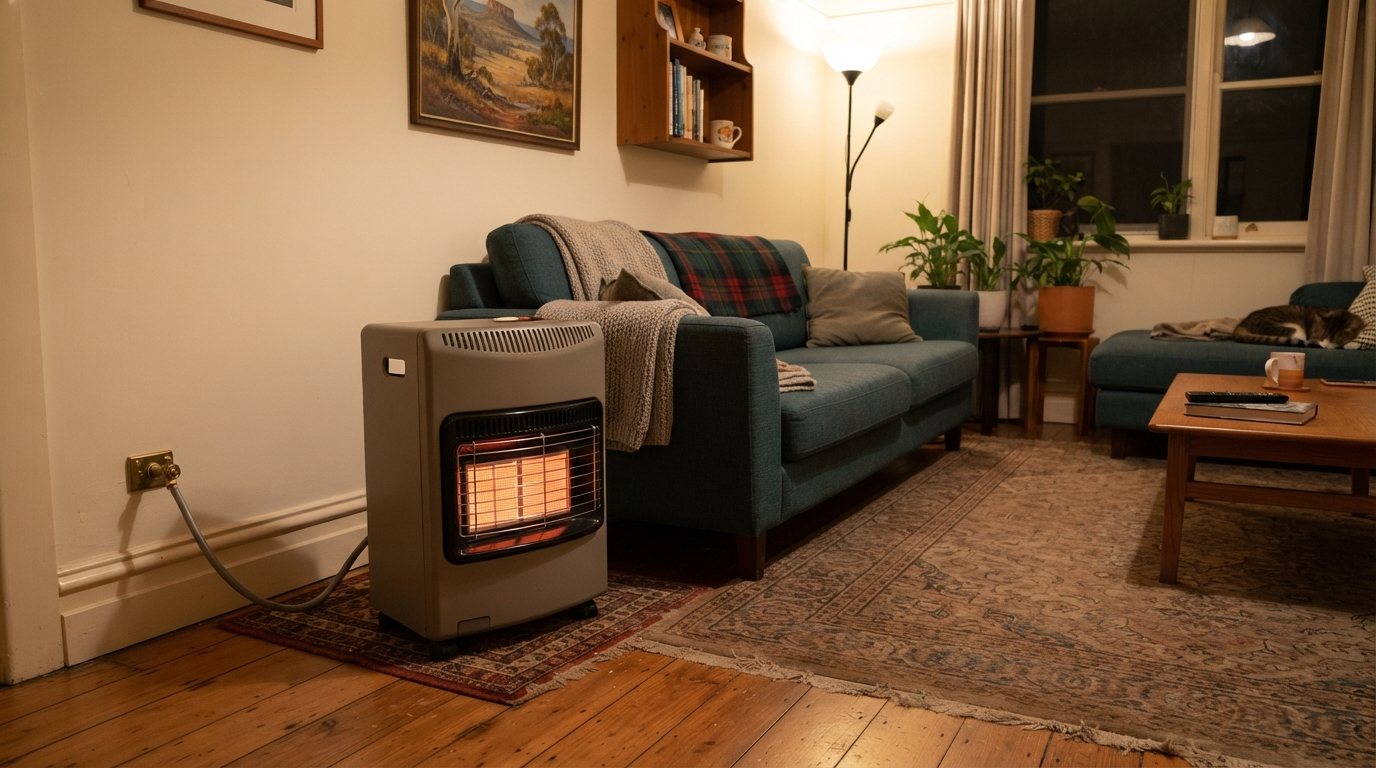
A gas bayonet is a wall or floor socket for gas, the way a power point is for electricity. Plugging a portable heater into one is normal use. Getting a new one put in isn’t.
The rules
| Job | Who can do it |
|---|---|
| Plug a portable gas heater into an existing bayonet | You, if the heater is legal to use in your state |
| Install, move or add a bayonet point | Licensed gasfitter, every state |
The catch is the heater, not the bayonet. Unflued gas heaters release combustion gases into the room, and some states restrict or ban their use in homes, or require them to meet stricter emission standards. Check your state’s gas safety regulator before you buy one, especially second-hand.
Using a portable gas heater safely
- Check the heater: a compliance badge, no damage to the hose or fitting, and a recent service.
- Push the fitting in firmly until it clicks, and make sure it’s locked before turning the heater on.
- Keep the room ventilated: don’t block vents, and don’t use it in a bedroom overnight or a small closed room.
- Keep clearances: curtains, furniture and washing well away from the front.
- Turn it off and unplug it at the bayonet when you’re finished for the season.
Signs to stop using it
- A yellow or flickering flame instead of a steady blue one
- Soot or stains on the heater or wall
- A gas smell, headaches, or drowsiness in the room
If you smell gas, turn the heater off, don’t use switches or flames, open doors and windows, and call your gas distributor’s emergency line.
Getting a bayonet installed
Adding or moving a bayonet is gasfitting. Photograph where you want it and where your gas supply is, and a gasfitter can often quote from that. See can I install or move a gas appliance myself?
Sources
Every rule on this page is taken from these official sources. If a rule has changed, please tell us and we’ll fix it.
This guide is general information, not legal or professional advice. Rules differ between states, councils and individual properties, and they change. Confirm with your state regulator or council before starting work, and if in doubt, get a licensed tradesperson.