
Can I regrout tiles or replace shower silicone myself?
Short answer
Yes. Regrouting tiles and replacing shower silicone is maintenance you can do yourself everywhere in Australia. The catch: if water is getting behind the tiles, new grout won't fix it. Loose or drummy tiles, water stains on the other side of the wall, or swollen skirting boards suggest the waterproofing membrane has failed, and that needs more than new grout.
Black grout and mouldy silicone make a clean bathroom look dirty. Replacing them is one of the most satisfying weekend jobs there is, and it’s legal DIY everywhere.
Regrout or waterproofing problem?
| What you see | Likely problem | Who fixes it |
|---|---|---|
| Stained or mouldy grout, cracked silicone | Worn grout and sealant | DIY |
| Crumbling or missing grout | Worn grout | DIY |
| Loose or hollow-sounding (drummy) tiles | Water behind the tiles | Get it checked |
| Stains, peeling paint or swollen skirting on the other side of the wall | Failed waterproofing | Waterproofer or builder |
If you’re seeing the last two, see can I waterproof my own bathroom? before spending a weekend on grout.
Replacing shower silicone
- Cut out the old silicone with a sharp blade or silicone removal tool, then pick out the rest.
- Clean off mould and residue. Mild detergent or diluted white vinegar works for most mould. Let it dry completely, ideally 24 hours with the fan running.
- Mask both sides of the joint with painter’s tape for a clean line.
- Apply a wet-area (bathroom) silicone in one steady bead.
- Smooth it with a wet finger or a profile tool, then remove the tape straight away.
- Leave it to cure before using the shower, usually 24 hours (check the tube).
Regrouting tiles
- Rake out the old grout with a grout saw or multi-tool, taking care not to chip the tiles.
- Vacuum and clean the joints, and let them dry.
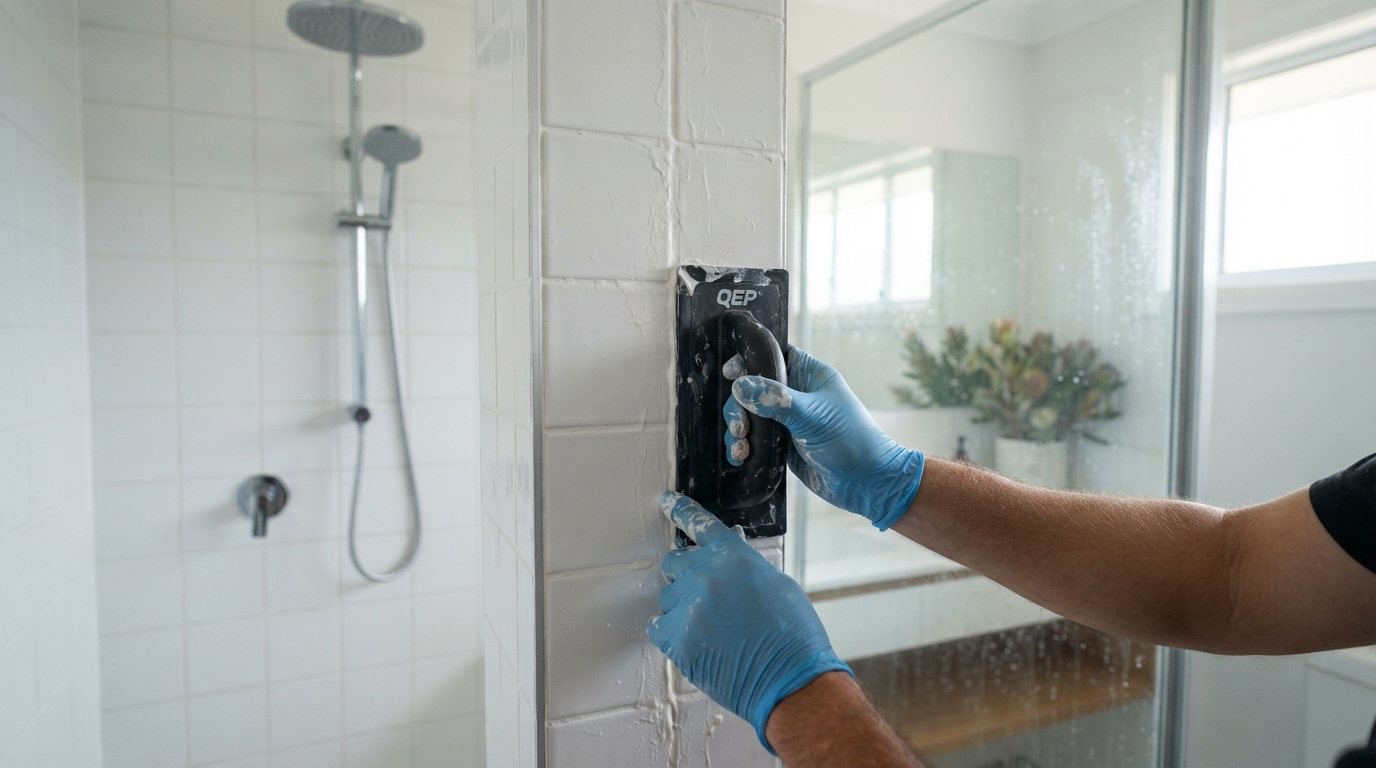
- Mix and press in new grout with a rubber float, working diagonally across the joints.
- Wipe off the excess with a damp sponge before it hardens, then polish off the haze once it’s dry.
- Seal the grout once cured if the product recommends it.
Don’t grout the corners and the joint where the wall meets the floor or bath: those move, so they get silicone, not grout.
Keeping mould away
Run the exhaust fan during and after every shower, squeegee the walls, and fix leaks quickly. For stubborn mould, see how to get rid of mould in the bathroom.
Sources
Every rule on this page is taken from these official sources. If a rule has changed, please tell us and we’ll fix it.
This guide is general information, not legal or professional advice. Rules differ between states, councils and individual properties, and they change. Confirm with your state regulator or council before starting work, and if in doubt, get a licensed tradesperson.